Slow is the new fast: electric boat rules in the Netherlands
Last updated 2026-10-12
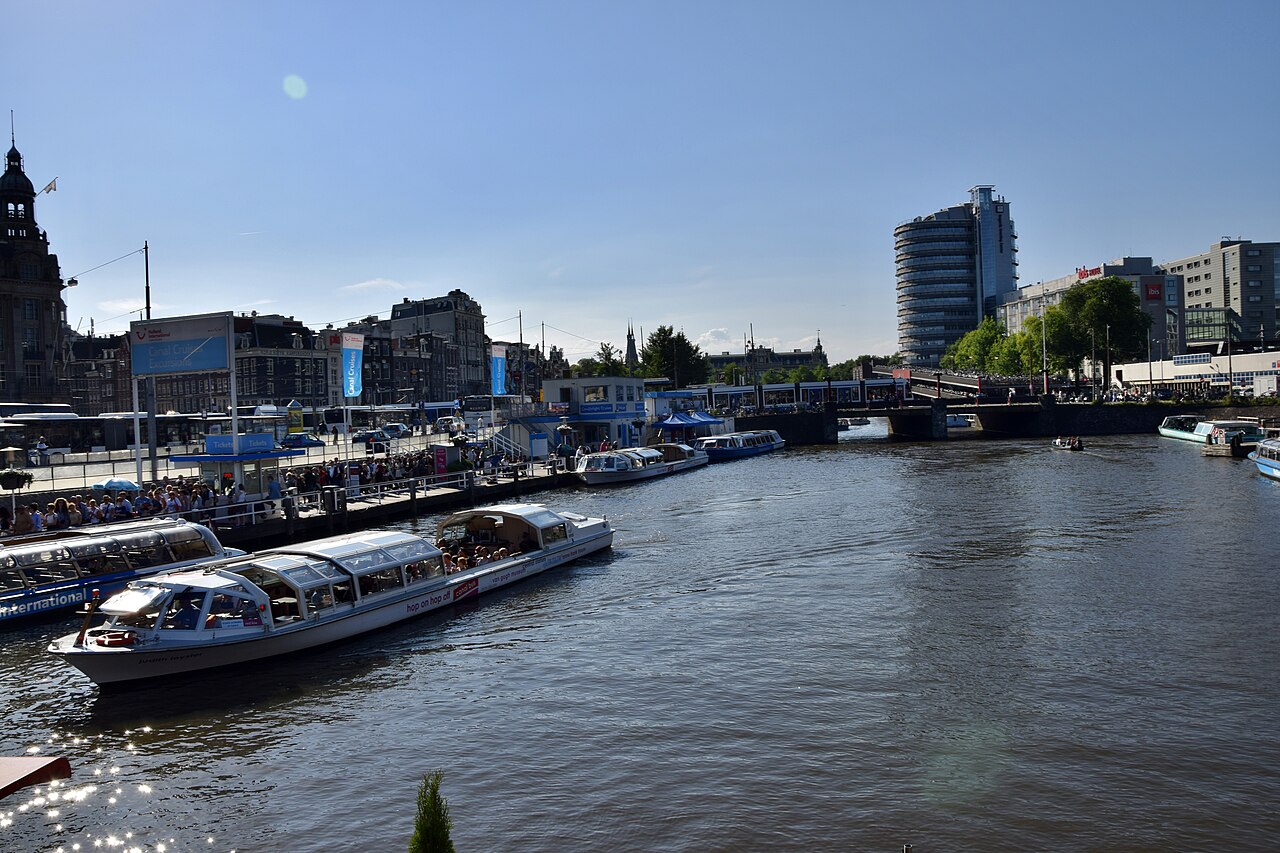
At a glance
| Licence | Klein vaarbewijs required for boats that can go faster than 20 km/h, or that are longer than 15 m. Motor power does not decide. |
|---|---|
| Always a licence | On the IJmeer, Markermeer and Wadden Sea, whatever the boat. |
| Minimum age | 18 to drive a fast motorboat. |
| Registration | Fast motorboats, under 20 m and faster than 20 km/h, must be registered for almost all inland waters. Jet skis too. |
| Speed limits | Many waterways are limited to 6 or 9 km/h. Faster sailing only where it is allowed. |
| Jet skis | Only in designated areas. |
| Alcohol limit | 0.5 per mille, for recreational and commercial boating. |
| Electric-only zones | Amsterdam's centre since 1 April 2025, plus routes and towns such as Giethoorn and parts of Friesland. |
The Netherlands is the one country in Europe where boating feels like cycling. Canals everywhere, bridges every hundred metres and a general sense that if you are in a hurry, you are doing it wrong.
The rules follow the same logic. They care about how fast your boat can go, not how many kilowatts it has. And in a growing number of places, they care about whether it burns anything at all.
We went through the national rules and the local zero-emission zones so you know where a slow electric boat is welcome and where a fast one needs papers.
Paddle out under 20 km/h: the licence
A klein vaarbewijs, the Dutch small craft licence, is required if your boat:
- can go faster than 20 km/h, or
- is longer than 15 m.
What counts is the boat's potential top speed, not how fast you actually drive. A light electric boat that can plane past 20 km/h needs a licence, even with a modest motor. A slow electric sloop does not.
On the IJmeer, Markermeer and Wadden Sea, a licence is always required. Driving without one costs 430 to 650 euros, depending on the water.
Drivers of fast motorboats must be at least 18.
Fast boats get a number
Fast motorboats, defined as boats under 20 m that can go faster than 20 km/h, must be registered with the RDW, the Dutch vehicle authority. This applies on almost all inland waters. The exceptions are the Eems and Dollard, the Westerschelde, the Ghent to Terneuzen canal and the Grensmaas, although local rules may still apply there. Jet skis follow the same rule.
Fast boats also carry extra duties. A kill switch must be fitted and used, every person on board needs a lifejacket, and anyone steering standing up must wear one.
Speed limits: no dropping in
Many Dutch waterways have a limit of 6 or 9 km/h. Faster sailing is allowed only where the waterway authority has set aside a stretch for it.
Fines start at 110 euros for up to 6 km/h over the limit and reach 800 euros for 45 km/h or more over. Racing motorboats costs 290 euros.
Jet skis: designated areas only
Jet skis count as fast craft. They need a licence, registration and a driver of at least 18, and they may only be used in designated areas. Riding outside them costs 290 euros.
The rule is about the craft and its speed, not the fuel. An electric jet ski that can exceed 20 km/h falls under it in the same way as a petrol one.
The zero-emission locals: where electric is required
This is where the Netherlands leads Europe. Several cities and regions have made electric, or at least emission-free, the only option:
- Amsterdam. Since 1 April 2025, the city centre inside the Singelgracht is a zero-emission zone for recreational boats. Only electric, hydrogen or muscle power. Boats with older permits have until 2028 or 2030. The Amstel and Kostverlorenvaart through-routes are excepted.
- Amersfoort. Combustion engines banned on municipal waters, except the Eem, since 1 January 2020.
- Kromme Rijn. Electric only between Utrecht and the weir at Werkhoven since 1 January 2025.
- Giethoorn and Steenwijkerland. Rental boats must be electric since 1 January 2023.
- Friesland and South Holland. Electric-only routes in Friesland and on the Nieuwkoopse Plassen.
- Weerribben-Wieden National Park. The narrow canals are open only to silent electric boats, canoes and rowing boats.
- Utrecht and Haarlem. New mooring permits go only to zero-emission boats since 1 January 2025.
The full list, with sources, is in our register of electric-only waters in the Netherlands and in our guide to Amsterdam's emission-free canals.
Alcohol and safety: avoid the wipeout
Alcohol
The limit is 0.5 per mille, for recreational and commercial boating alike. Above it, you face a summons and a fine from 350 euros. Refusing a breath test is also an offence.
Lifejackets
On fast motorboats, there must be a lifejacket for every person on board. Each missing lifejacket is a fine, from 55 euros for one to 270 euros for five or more. A fire extinguisher is also required, and missing one costs 170 euros.
Charging after the session
The Netherlands has more charging points on our map than any other country, from canal-side chargers in Amsterdam to EV chargers on the quay in Friesland and Zeeland. See the charging map for the Netherlands.
Our verdict: built for electric
So, is the Netherlands the best country for electric boating? It has a strong claim. A slow electric boat needs no licence and no registration, and in Amsterdam and a growing list of towns it is the only motorboat allowed.
The one trap is speed. The moment your boat can exceed 20 km/h, you need a licence, a registration number and a driver of at least 18, whatever powers it. Choose the boat for the waters you will use. On most Dutch canals, 6 km/h is all you will ever need.
For the same rules elsewhere, see boat licence rules across Europe.
Questions
Do I need a licence for an electric boat in the Netherlands?
Only if the boat can go faster than 20 km/h or is longer than 15 m. On the IJmeer, Markermeer and Wadden Sea, a licence is always required.
Does my electric boat need to be registered in the Netherlands?
If it is under 20 m and can go faster than 20 km/h, yes, for almost all inland waters. Slower boats do not need this registration.
Can I take a petrol boat into Amsterdam's canals?
Not inside the Singelgracht. Since 1 April 2025, recreational boats there must be electric, hydrogen-powered or muscle-powered, with transition periods for some older permits.
What is the speed limit on Dutch canals?
Many waterways have a limit of 6 or 9 km/h. Fines for speeding start at 110 euros and reach 800 euros.
What is the alcohol limit for boating in the Netherlands?
0.5 per mille, for both recreational and commercial boating. Above that, fines start at 350 euros.
Sources
Rules change. Check with the local authority before you launch.