Six horsepower and a 300 m line: electric boat rules in France
Last updated 2026-10-12
At a glance
| Licence | Permis plaisance required for motors above 4.5 kW (6 CV), electric or combustion. |
|---|---|
| Licence types | Côtier for the sea up to 6 nautical miles, fluvial for inland waters. Hauturier and grande plaisance fluviale extend them. |
| Minimum age | 16 for the coastal and inland licences. 18 for grande plaisance fluviale. |
| 300 m zone | Speed generally limited to 5 knots within 300 m of the shore. |
| Jet skis | Licence above 6 CV. Daytime only, 2 miles from shelter for single-seaters, up to 6 miles for multi-seaters. |
| Alcohol limit | 0.5 g/l of blood, or 0.25 mg/l of breath, on inland waters. |
| Lakes | Set locally by prefectural order. Several lakes ban combustion engines, and some ban jet skis outright. |
France has more coastline, rivers and canals than most boaters could cover in a lifetime, and one number that decides how you get onto any of them: 6 CV.
That is 4.5 kW. Below it, no licence. Above it, the permis plaisance. The motor's power source does not matter, which makes France simpler than Germany and stricter than Italy.
We went through the licence rules, the coastal speed zone and the lake orders so you know where a small electric boat glides in and where a fast one needs paperwork.
Paddle out under 4.5 kW: the licence
A permis plaisance is required for a motor above 4.5 kW, or 6 CV. At or below that, you can drive without one, at sea and on inland waters.
Above the threshold, there are two base licences:
| Licence | Where | Minimum age |
|---|---|---|
| Permis côtier | At sea, up to 6 nautical miles from shelter, day and night, any power. Also lakes and closed waters | 16 |
| Permis fluvial | Inland waters, motorboats under 20 m | 16 |
| Hauturier (extension) | At sea, no distance limit | Requires the côtier |
| Grande plaisance fluviale (extension) | Inland waters, any length | 18 |
Candidates aged 16 and 17 need parental consent.
The low threshold is why so many French rental boats and tenders run motors just under 6 CV. It is also why an electric outboard of 5 kW or more needs a licence here, even though it would not in Germany.
No dropping in: the 300 m zone
Within 300 m of the shore, speed is generally limited to 5 knots. Where there are marked channels for motorised craft, you use them to go in and out. Mayors and the maritime prefectures can set stricter limits, close areas or restrict hours, and they often do on busy beaches in summer.
Since 5 June 2026, a new decree makes it an offence for the driver of a motor pleasure craft to fail to adapt speed and handling to the conditions, such as swimmers nearby, busy channels or poor visibility. The fixed fine is 135 euros and can reach 750 euros, and the licence can be suspended for up to a year.
Jet skis: day sessions only
Jet skis follow the general licence rule: above 6 CV, you need at least the permis côtier. Without a licence, you can only ride on a supervised outing with a qualified instructor.
The extra rules at sea:
- Riding is allowed in daytime only.
- Single-seat craft may go no more than 2 nautical miles from shelter.
- Multi-seat craft may go up to 6 nautical miles, with approved equipment and conditions that allow a return without help.
- Riders wear a buoyancy aid: 50 N up to 2 miles, 100 N between 2 and 6 miles.
- Since the end of 2023, everyone on board wears neoprene of at least 2 mm.
- The kill cord is attached whenever the engine runs.
None of these rules distinguish between petrol and electric craft. Lakes are another matter: Lake Annecy bans jet skis outright.
Lakes: every prefecture has its own locals
Lakes are regulated by prefectural order, one lake at a time. Some of the most attractive have closed to combustion engines:
- Lac de Saint-Cassien. Since an order of 30 March 2026, only electric boats on the whole reservoir. Maximum 18.4 kW, 10 km/h, and 5 km/h within 50 m of the shore.
- Lac de Sainte-Croix. Combustion engines banned except for rescue. Electric boats up to 18.4 kW and 20 km/h, according to trade press citing the nature park.
- Lac d'Aiguebelette. Combustion boats strictly banned, maximum 9 km/h, and every craft needs a paid navigation permit.
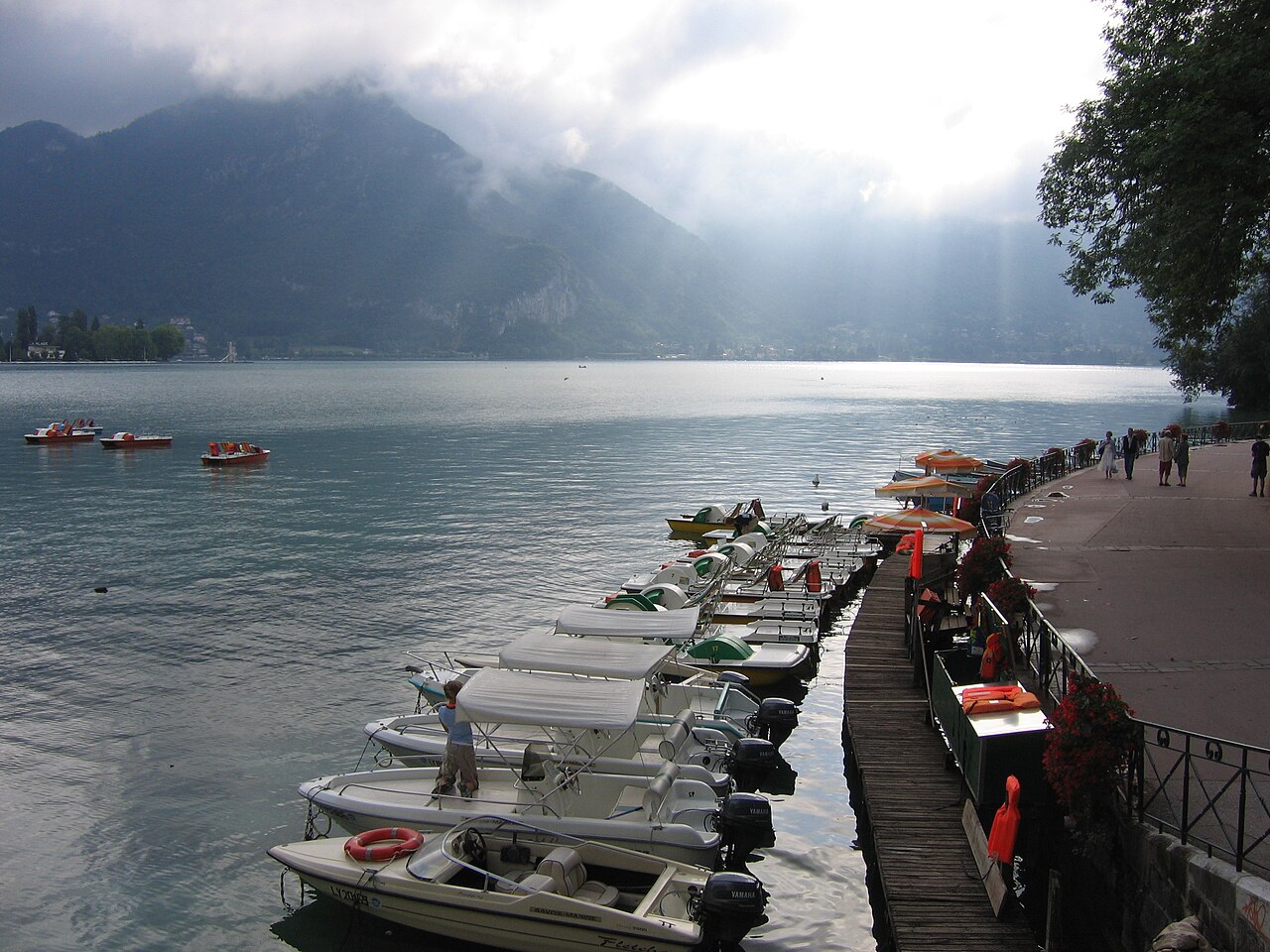
- Lake Annecy. Combustion boats are allowed with a licence above 6 CV, but jet skis are banned.
Every lake with a source is in our register of electric-only waters in France.
Alcohol, registration and safety: avoid the wipeout
Alcohol
On inland waters, the limit is 0.5 g/l of blood or 0.25 mg/l of breath. Above 0.8 g/l it is a serious offence, with up to two years in prison, a fine of up to 4,500 euros and suspension of the licence. Drugs are zero tolerance.
At sea, the June 2026 decree created an offence of manifest drunkenness for drivers of motor pleasure craft, judged on visible signs. We could not confirm a measured limit at sea from the decree itself.
Registration
Since 1 January 2022, francisation and registration of recreational boats have been merged into a single procedure handled by the maritime administration. We could not confirm the current thresholds for small boats from an official source, so ask the local maritime office (DDTM or DML).
Equipment
Required safety equipment depends on how far from shelter you go. Jet ski riders wear a buoyancy aid at all times. Check the current list for your distance category before you leave.
Charging after the session
France's public chargers for boats are concentrated on the Riviera, in Brittany and on the Alsace canals. See the charging map for France and our guide on how to charge an electric boat.
Our verdict: small motor, big coastline
So, is France good for electric boating? For small electric boats, yes. Under 4.5 kW you need no licence, and lakes like Saint-Cassien are open only to boats like yours.
Above that, France treats electric like petrol: same licence, same 300 m zone, same jet ski rules. Choose the motor with the 6 CV line in mind, check the prefectural order for your lake, and expect stricter local rules on busy coasts in summer.
For the same rules elsewhere, see boat licence rules across Europe and personal watercraft rules in Europe.
Questions
Do I need a licence for an electric boat in France?
Only if the motor is more powerful than 4.5 kW, which is 6 CV. At or below that, no licence is needed at sea or on inland waters.
What is the speed limit near the French coast?
Within 300 m of the shore, speed is generally limited to 5 knots. Local orders can set stricter limits or close areas.
How old do you have to be to get a French boat licence?
16 for the coastal and inland licences, with parental consent until 18. The grande plaisance fluviale extension requires 18.
Can I ride a jet ski in France?
Yes, with at least the coastal licence for craft above 6 CV. Riding is daytime only, within 2 miles of shelter for single-seaters and up to 6 miles for multi-seaters.
Are electric boats allowed on lakes that ban motorboats?
On some. Lac de Saint-Cassien and Lac de Sainte-Croix ban combustion engines and allow electric boats with power and speed limits. Lake Annecy bans jet skis whatever powers them.
Sources
- Digischool, French boat licence categories
- Figaro Nautisme, jet ski rules, 1 September 2026
- Préfecture de Police, navigation and safety leaflet, May 2025
- Digischool, the decree of 5 June 2026 on alcohol and boat handling
- DM Guadeloupe, registration of recreational boats, August 2021
- Prefectural order on Lac de Saint-Cassien, 30 March 2026
- Figaro Nautisme, Lac de Sainte-Croix, July 2025
- Navigation leaflet for Lake Annecy, July 2015
- CCLA, navigation rules for Lac d'Aiguebelette
Rules change. Check with the local authority before you launch.