Guides
The price of the glide: electric boat running costs
Electricity against petrol for the same work on the water, with the sums shown. EU prices, three worked examples and where the saving is real.
9 October 2026 · 6 min read
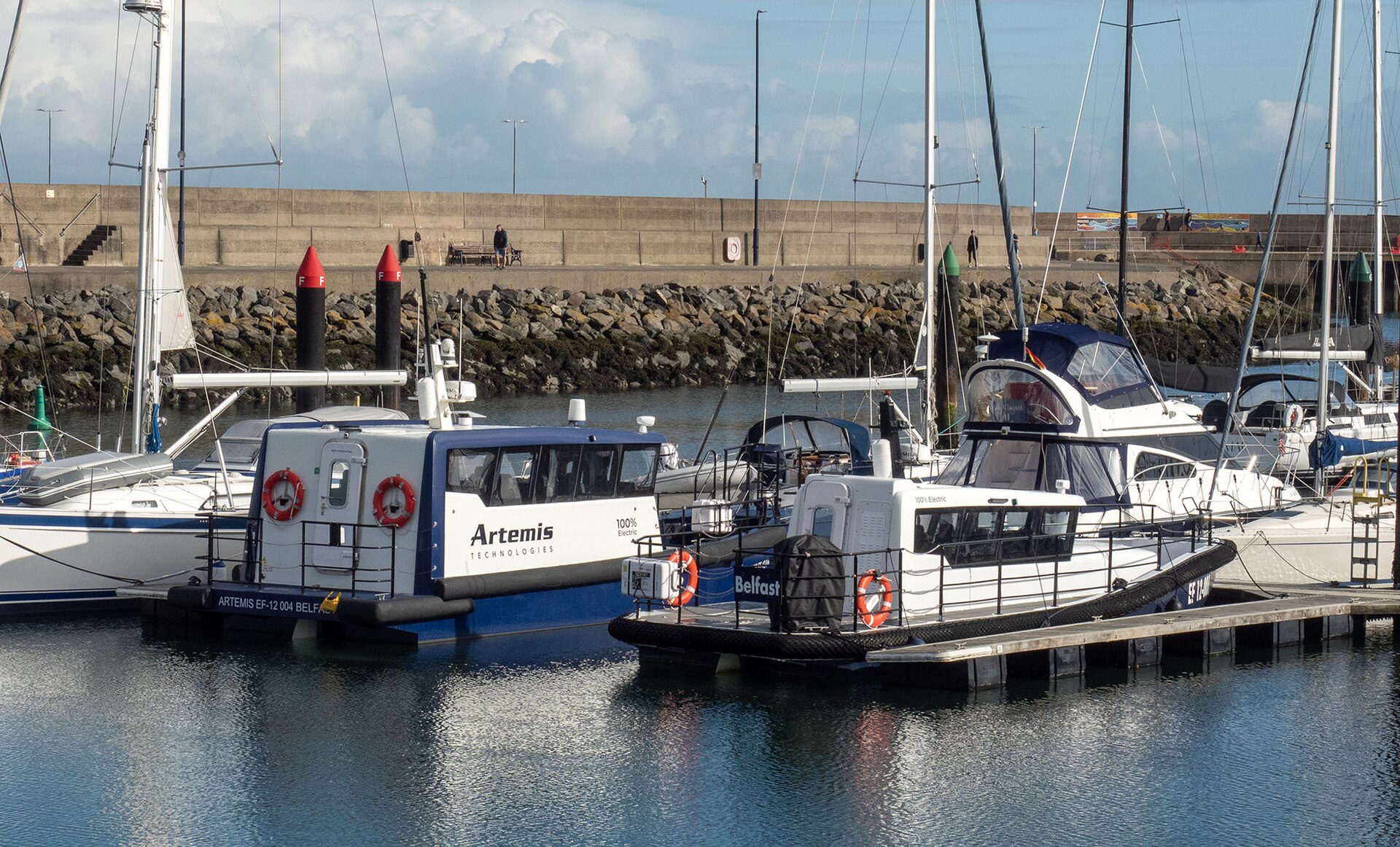
Picture the marina office at dawn. You are standing in line to pay for a tank of petrol that costs more than a decent dinner, while the smell of exhaust hangs in the glassy air. We have all been there, wondering if the electric crowd really is saving money or just trading a fuel bill for a battery debt. The makers love to claim you will save a fortune, but the truth depends on where you paddle out.
We checked the math so you do not have to. Here is how the energy costs stack up when you trade the pump for the plug.
The line-up: electricity vs petrol prices
To get a clear view of the swell, we need a baseline. Prices on land vary wildly across Europe, and the water is no different.
Electricity. Eurostat puts the average household price in the EU at 0.2896 euros per kWh, taxes included, for the second half of 2025. The spread is wide. Ireland is the high point at 0.4042, while Hungary is the basement at 0.1082.
Petrol. We used 1.80 euros per litre as a round figure. Fuel bought at a marina often costs more than at a roadside station. You know your local price, so plug it in.
Catching the wave: comparing work at the prop
You cannot compare a kilowatt-hour with a litre directly. It is like comparing a surfboard volume to a wave height. What matters is how much work actually reaches the propeller.
- A litre of petrol holds about 8.9 kWh of energy.
- A petrol outboard is a bit of a kook when it comes to efficiency. It turns roughly a quarter of that energy into work at the propeller. The rest leaves as heat and noise. That gives about 2.2 kWh of useful work per litre.
- An electric drive is a different animal. It delivers at least 85 percent of the battery energy to the propeller, according to one drive maker. To do that same 2.2 kWh of work, it takes about 2.6 kWh from the battery.
So, one litre of petrol and 2.6 kWh of electricity do the same job.
| Where you charge | Price per kWh | Cost of 2.6 kWh | Share of petrol cost |
|---|---|---|---|
| Hungary, at home | 0.11 euros | 0.28 euros | 16 percent |
| EU average, at home | 0.29 euros | 0.76 euros | 42 percent |
| Ireland, at home | 0.40 euros | 1.06 euros | 59 percent |
| A marina charging 0.50 euros | 0.50 euros | 1.31 euros | 73 percent |
Against petrol at 1.80 euros a litre, electricity wins every heat. How much it wins by depends entirely on your tariff.
Three sets: worked examples
We ran the numbers for three different sessions, all using the EU average price and adding 10 percent for charging losses.
A small displacement boat. Cruising at 3 kW for one hour uses 3 kWh. Cost: about 0.96 euros an hour. That is less than the price of a cheap coffee to stay on the water for sixty minutes.
A fast foiling day boat. The Candela C-8 was reported to draw 16 kW at 22 knots. One hour at that speed uses 16 kWh. Cost: about 5.10 euros an hour. Filling its 69 kWh battery from empty costs about 22 euros.
A light sit-on craft. ROXEN has a 5.25 kWh battery that gives up to 75 minutes of riding. A full charge costs about 1.67 euros. ROXEN is a recreational craft.
For comparison, Candela claimed at the C-8 launch that its driving costs were 95 percent lower than for a combustion boat. That figure combines cheap electricity with the energy saving from foiling, and compares against a thirsty petrol boat. It is a maker claim, not a universal rule.
A season of stoke: what the saving is worth
Percentages are fine, but we want to see the euros. How much stays in your pocket after a full summer?
A leisure boat. Suppose a boat burns 200 litres of petrol in a season. That is 360 euros. The electric equivalent at the EU average is about 150 euros. The saving is roughly 210 euros a year.
A rental craft. Suppose a craft burns 20 litres a day for 100 days. That is 2,000 litres, or 3,600 euros. The electric equivalent is about 1,500 euros. The saving is roughly 2,100 euros a year, per craft.
The lesson is plain. For an occasional leisure boater, energy cost is not the main reason to switch. For anyone running a rental fleet, the groundswell of savings is hard to ignore.
The rest of the quiver: other running costs
Energy is just one part of the gear. You have to look at the whole kit.
Maintenance. An electric drive has no engine oil, no spark plugs, no fuel filters and no exhaust system. The annual engine service mostly vanishes. Everything outside the drive stays the same: antifouling, anodes, steering, the trailer and the hull.
Battery ageing. A battery loses capacity over the years. On a boat with a large battery, replacement is the biggest single wipeout your bank account will ever face. Ask three questions before buying: how long is the warranty, what capacity does it guarantee at the end, and what does a new battery cost today.
Berth electricity. Check how your marina bills. A metered rate is fair. A flat daily fee can make each small charge expensive. See How to charge an electric boat.
Insurance. Premiums follow the value of the boat. Since electric boats cost more to buy, expect to pay more to protect them. Ask for a quote before you commit.
Access. This is a saving of a different kind. An electric boat can use waters that are closed to combustion engines, and berths that are only granted to emission-free boats. See Europe's electric-only waters.
The drop-in price: purchase cost
Running costs are lower, but the drop-in price is usually higher. The gap grows with the size of the battery.
A small electric outboard costs more than a petrol one, but the difference is modest. A fast electric boat with a large battery can cost far more than its petrol counterpart. The savings on energy and servicing pay that back only if the boat is used heavily.
So, is it worth paddling out?
- Light use, small boat. Roughly neutral. Choose electric for the quiet, the simplicity and the access.
- Light use, large fast boat. Electric costs more over its life. Choose it for the stoke, not the savings.
- Heavy use, any size. Electric can pay for itself. Do the sums with your own hours.
Calculate your own session
Ready to check your own local break? Follow these steps.
- Find your fuel use for a season, in litres.
- Multiply by 2.6 to get the equivalent kilowatt-hours.
- Multiply by the price you will pay per kWh where you charge.
- Compare with your fuel bill.
Then add what you spend on engine servicing each year. Leave battery replacement out until you know the warranty terms, and treat the result as the best case to set against the price difference.
Questions
How much does it cost to charge an electric boat?
At the EU average household price of about 0.29 euros per kWh, a 5 kWh battery costs about 1.70 euros to fill and a 69 kWh battery about 22 euros, charging losses included.
Is an electric boat cheaper to run than a petrol one?
On energy, yes. For the same work at the propeller, electricity costs roughly 40 percent of petrol at average EU prices. The purchase price is usually higher.
How many kWh equal a litre of petrol on a boat?
A litre of petrol holds about 8.9 kWh, but an outboard turns only about a quarter of it into work at the propeller. An electric drive needs about 2.6 kWh from the battery to do the same.
Do electric boats need less maintenance?
The drive does. There is no oil, no spark plugs and no fuel system. The hull, anodes, antifouling and steering need the same care as on any boat.
Will the battery need replacing?
Eventually. Batteries lose capacity with age and use. Ask the maker for the warranty terms and the price of a replacement before you buy.